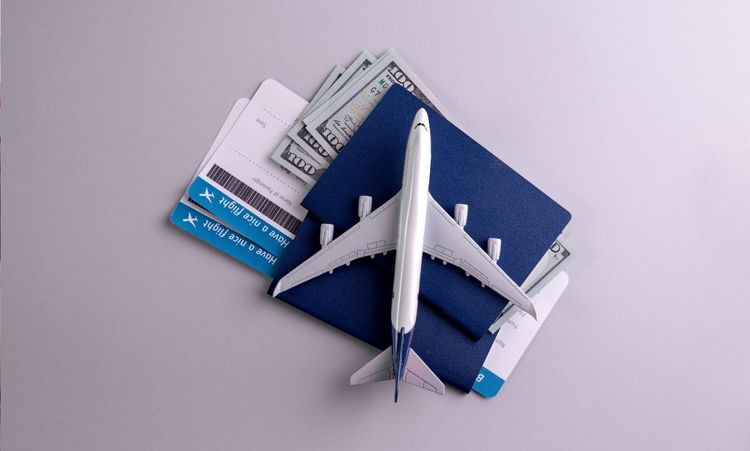
A fare that looks reasonable over breakfast can be noticeably higher by lunch, then fall again before evening. These movements can seem arbitrary to travelers watching the same route, date, and cabin. Behind the fluctuations, however, sits a constantly changing marketplace where airlines are recalculating what each remaining seat may be worth.
Airline Tickets Are Priced as Perishable Inventory
An empty hotel room tonight cannot be sold tomorrow. An airline seat works much the same way. Once an aircraft leaves the gate, every unsold seat represents revenue the airline can no longer recover.
That creates an unusual pricing problem.
Airlines want enough early bookings to establish reliable revenue, but selling every seat cheaply months before departure could mean sacrificing money from passengers willing to pay more later.
The result is a system built around managing limited, expiring inventory.
Two passengers sitting next to each other may therefore have paid very different amounts. One might have booked during a low-fare period. Another may have bought the ticket three days before departure when cheaper inventory was gone.
This does not necessarily mean the airline changed the physical product. Often, what changed was the price category available for purchase.
That distinction is central to understanding modern airfare.
Why Flight Prices Can Change Several Times in a Single Day
Airline pricing systems continually receive new information. Reservations are made. Travelers cancel. Corporate booking patterns emerge. Competitors adjust fares. A particular departure starts filling faster than expected.
Each development can affect the inventory offered to the next shopper.
Airlines have long used revenue-management systems to forecast demand and decide how many seats should be available at different prices. Modern systems can process large quantities of booking and market data, allowing inventory decisions to happen frequently.
Imagine a flight with 180 seats.
An airline may initially make a limited number available at its lowest practical fare. When enough of those seats sell, the next fare level becomes the cheapest available option. The advertised price consequently rises even though the aircraft, schedule, and destination have not changed.
Later, the system might determine that bookings have slowed. Lower-priced inventory could reopen.
From a consumer's perspective, the ticket has simply become cheaper again.
Inside the airline's system, something more specific happened: the combination of available inventory and expected demand changed.
Fare Classes Create Invisible Price Steps
Economy class is not necessarily one price category.
Airlines commonly divide seats into booking classes, sometimes called fare buckets. These categories can carry different prices and conditions despite placing passengers in the same cabin.
A simplified example might look like this:
- 10 seats available at $180
- 15 seats available at $220
- 20 seats available at $270
- Remaining inventory offered at higher levels
These numbers are illustrative, but the underlying principle matters.
Suppose the final two seats in the $180 category sell at 10:15 a.m. Someone searching at 10:20 may see $220. Nothing dramatic happened to overall demand in those five minutes. The cheapest inventory simply disappeared.
Availability can also move in the opposite direction.
Revenue-management systems may reopen a lower fare category when booking performance suggests that the airline needs additional demand. A cancellation can alter availability too, although the relationship is not always as simple as one canceled ticket immediately producing one cheap seat.
This helps explain the sometimes puzzling experience of seeing a fare rise and later return to something close to its earlier price.
Demand Forecasts Matter as Much as Current Sales
Airlines are not pricing seats solely according to how many passengers have already booked. They are also estimating who might book next.
Forecasting is therefore crucial.
A Tuesday afternoon flight six months away may have plenty of empty seats. That does not automatically mean the airline wants to sell them cheaply. Historical data may suggest that business travelers tend to book that route closer to departure and tolerate higher fares.
A leisure-heavy route can behave differently.
Demand might arrive earlier around school holidays, major festivals, sporting events, or popular vacation periods. Airlines can adjust inventory based on the expected booking curve rather than waiting for the aircraft to become visibly full.
Forecasts are imperfect, of course.
When actual bookings run ahead of expectations, cheaper categories can disappear quickly. When demand disappoints, airlines may release more affordable inventory to stimulate sales.
Airfare therefore reflects both present conditions and predictions about the future.
Competition Can Move Prices Quickly
No airline prices a route in complete isolation.
On routes served by several carriers, one competitor's decision can affect the wider market. If one airline introduces a lower fare, rivals may respond. If a carrier reduces capacity or withdraws a promotion, others may have less reason to maintain their lowest prices.
Competition becomes especially important when travelers view several reasonable substitutes as interchangeable.
A passenger flying between two major cities might have a choice of multiple airlines and departure times. Each carrier has to consider not only demand for its own flight but also the alternatives displayed beside it on booking platforms.
The response is not always an immediate price match.
An airline may have a stronger schedule, better load factor, or more connecting passengers and decide it can maintain a higher fare. Another may need additional bookings and become more aggressive.
These decisions can produce noticeable movements during a single day, particularly in competitive markets.
Timing Changes the Value of the Remaining Seats
The number of days until departure affects how airlines evaluate inventory.
Far from departure, there is considerable uncertainty. The airline has time to wait for future demand. Closer to takeoff, the commercial calculation changes because the opportunity to sell remaining seats is disappearing.
That does not mean prices automatically increase every day.
A lightly booked flight can still become cheaper near departure if the airline needs to stimulate demand. Conversely, a flight filling quickly may become expensive weeks in advance.
What often changes is the airline's assessment of the passengers still likely to book.
Late purchasers can include business travelers, people responding to family emergencies, passengers whose plans changed suddenly, or customers with limited scheduling flexibility. Some of these travelers are less sensitive to price.
Revenue-management systems attempt to preserve inventory for potentially higher-paying demand without leaving too many seats empty.
It is a balancing act rather than a simple countdown.
Your Search Is Not Necessarily Causing the Price Increase
One persistent belief says repeatedly checking the same flight causes an airline or booking website to raise the fare specifically for that shopper.
The reality is more complicated.
Prices can certainly change while someone is researching a trip. But correlation is not evidence that repeated searches caused the increase. Inventory may have changed because other travelers booked seats, a fare category closed, or the airline updated availability.
There are also technical reasons why two searches may display different totals.
Currency conversion can matter. So can taxes, fees, point of sale, itinerary construction, and whether a booking platform is displaying recently cached information rather than a newly confirmed fare.
Cookies and personalization are legitimate concerns across online commerce, and pricing practices deserve scrutiny. Still, a traveler should not automatically interpret every airfare increase as evidence that a website identified their interest and punished them for searching twice.
Often, the simpler explanation is changing inventory.
Search Engines Can Display Prices That Are Already Stale
Flight comparison websites perform an enormous amount of data processing. They cannot always verify every fare from every airline every second.
That can create a frustrating situation.
A search result might show an appealing price. The traveler clicks through, only to discover that the fare is no longer available.
This is sometimes described as a price change, but it may actually be an availability update.
The comparison platform could have received or stored the earlier fare when a cheap booking class remained open. By the time the traveler attempts to purchase, that inventory has disappeared.
Complex itineraries create additional opportunities for discrepancies. A connecting journey can depend on multiple flight segments having compatible inventory simultaneously. If availability changes on just one segment, the entire quoted fare may need to be recalculated.
The displayed number is therefore best understood as a current offer to investigate, not a permanent valuation attached to the flight.
Group Bookings Can Produce Unexpected Fare Jumps
Travelers booking several tickets together sometimes encounter an especially confusing pricing effect.
Suppose four people are traveling, but only two seats remain in the lowest fare category.
Depending on the airline and booking system, searching for four passengers may return a higher fare for everyone because four seats are not available at the cheapest level.
Searching for one or two passengers could reveal the lower fare.
That does not necessarily mean passengers should always split reservations. Separate bookings create practical complications. Families may end up with different ticket conditions, and changes or disruptions can be harder to manage when travelers are on separate records.
Still, checking availability for different party sizes can explain why a seemingly inexpensive fare disappears when the number of passengers increases.
The important factor is inventory within each pricing category, not simply the total number of empty seats on the aircraft.
Schedule Changes and Connecting Markets Influence Pricing
A flight's value is not determined only by passengers traveling between its origin and destination.
Many airlines operate networks.
A seat on a Nairobi-to-Doha flight, for example, might be useful to someone ending the journey in Doha or to passengers connecting onward to Europe, Asia, or North America. The airline has to decide how to allocate capacity among numerous potential itineraries.
That makes pricing considerably more complicated than dividing the cost of a flight by the number of seats.
The same seat can contribute to several possible journeys, each with different demand patterns and revenue potential. Airlines may therefore protect inventory for connecting passengers or adjust availability as demand across the network evolves.
Schedule disruptions can influence this environment as well.
Canceled flights, aircraft changes, missed connections, or capacity reductions can push passengers onto alternative services. A flight that looked comfortably available in the morning may suddenly absorb passengers from another departure.
Prices can react accordingly.
Sales and Promotions Are Only Part of the Picture
Travelers often assume that a lower fare must indicate a sale.
Sometimes it does. Airlines periodically launch promotional fares, seasonal campaigns, route-opening offers, and targeted discounts.
Yet many downward movements have little to do with public promotions.
An airline can make lower booking classes available without advertising a sale. Competitor activity might encourage a response. Forecast demand might weaken. Additional capacity could enter the market.
Likewise, the end of a promotion can cause prices to rise sharply even when the flight itself remains relatively empty.
This is why promotional language should not be confused with the underlying mechanics of airfare.
A genuine advertised discount may provide good value, but the word "sale" alone does not establish whether a fare is unusually low compared with the normal range for that route.
Historical context is more useful than marketing language.
What Travelers Can Actually Do With This Information
No traveler can see every variable inside an airline's revenue-management system. Trying to predict each tiny movement is usually less useful than establishing a sensible purchasing strategy.
Start by learning the normal price range for the journey.
Checking fares over several days or using price-tracking features can provide context. A $500 ticket means little by itself. If the same itinerary has generally been $650, it may be attractive. If it regularly appears around $420, waiting may be reasonable when travel dates remain distant and flexible.
Flexibility can be valuable.
Comparing nearby dates, airports, departure times, and acceptable connections often reveals bigger savings than trying to identify a supposedly magical booking hour.
Travelers should also judge the cost of waiting.
If the itinerary is important, dates are fixed, and the current fare fits the budget, postponing the purchase solely in hope of a small reduction introduces risk. Cheap inventory can disappear.
Price tracking is most useful when it informs a decision rather than turning every fluctuation into a signal.
Conclusion
The most useful shift in perspective is to stop thinking of an airline seat as an item with one correct price. Until departure, that seat exists inside a changing network of demand forecasts, competing itineraries, fare categories, and limited inventory.
Understanding why flight prices can change several times in a single day does not make short-term movements perfectly predictable. It does make them less mysterious. A sudden increase may simply indicate that a cheap fare bucket closed, while a later decline can reflect newly released inventory or softer-than-expected demand.
For travelers, context matters more than trying to outsmart every algorithm. Know the usual range, compare realistic alternatives, watch prices when there is time to wait, and recognize when an acceptable fare already meets the needs of the trip.